Consultant Experiences TL;DR
A great consulting career experience is about more than getting placed in a role. It should help you understand the opportunity, feel prepared before you start, and know where to turn once the assignment begins.
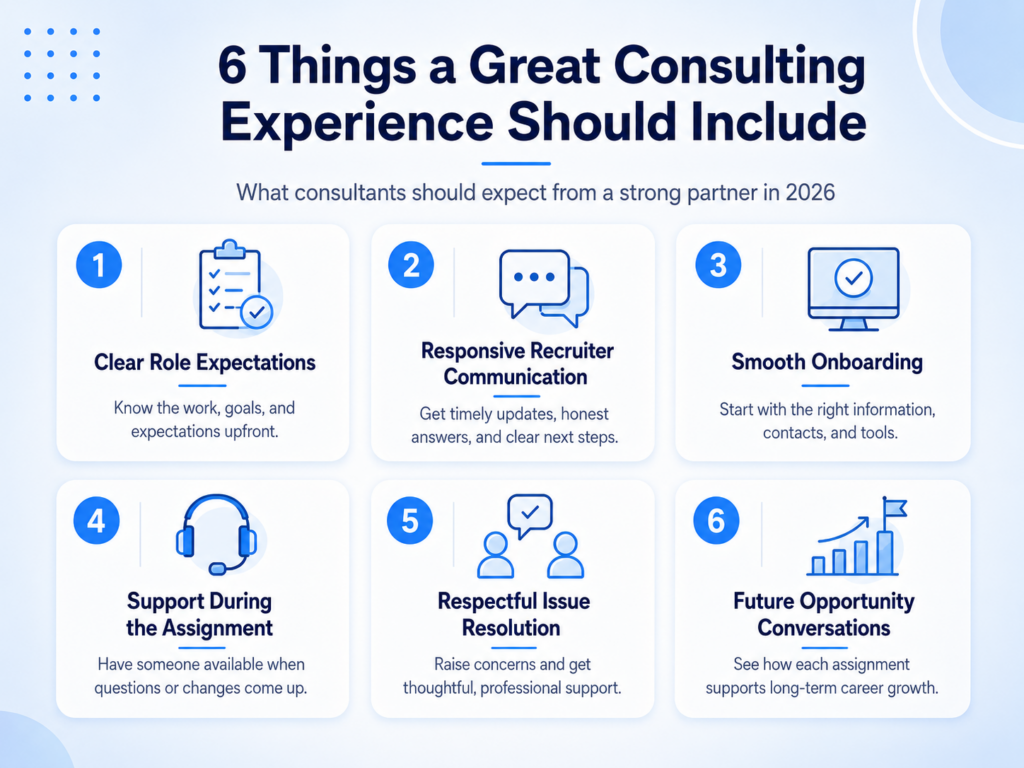
In 2026, consultants should look for partner organizations that provide clear role expectations, responsive communication, smooth onboarding, steady support, respectful issue resolution, and conversations about future growth.
The right consulting partner should treat you as more than a resume. They should understand your goals, respect your time, and help you move forward with confidence.
Consulting careers are about more than the assignment itself. Consulting can open the door to meaningful work, new industries, stronger skills, and more career flexibility. The assignment itself is only part of the experience.
What happens before, during, and after a role can shape how confident you feel, how quickly you can contribute, and whether working as a consultant supports where you want your career to go.
You may be stepping into a client environment with new teams, new systems, technical requirements, and high expectations. You may be balancing communication between the client and the consulting firm. You may also be trying to understand whether the opportunity is the right move for your long-term growth.
That is why a great consulting career experience should never feel like a transaction. Rather, it should:
- Feel clear from the beginning
- Feel supported once the work starts
- Help you see what could come next
In this era, consultant opportunities begin with more intention. Consultants want meaningful work, responsive communication, honest expectations, and partners who understand that a career is bigger than a single placement.
Why Consultant Expectations Are Changing
Consultants have more ways to build a career than ever before.
In the current market, many consultants are evaluating opportunities through a wider lens. Compensation and role fit still matter, but so do the quality of communication, remote or hybrid expectations, onboarding speed, project stability, skills development, and whether the assignment helps them stay competitive in a changing labor market.
Some professionals choose consulting for flexibility. Others are drawn to project-based work, exposure to new industries, or the chance to keep building specialized skills. Many are looking for roles that offer meaningful experience without locking them into one path too early.
That career optionality is changing what consultants expect from the organizations they work with.
It is no longer enough for a consulting firm to simply present an open role. Consultants want to understand how the opportunity fits into a bigger picture: what they will learn, what kind of work they will do, who they will work with, and how the assignment may support their next step.
Flexibility also matters. For some consultants, flexibility means remote or hybrid work. For others, it means contract length, project type, schedule expectations, or the ability to move between assignments as their goals evolve.
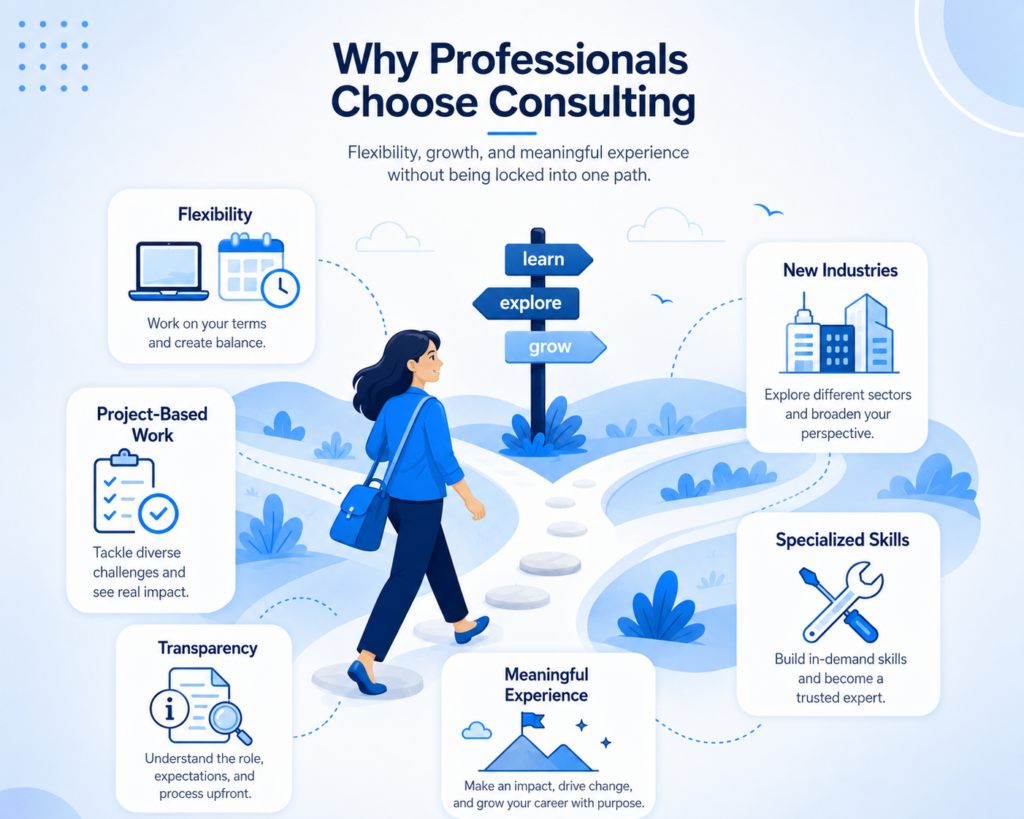
Transparency is just as important. Consultants want honest information about the role, the client environment, the timeline, consultant benefits, the interview process, and expectations once the work begins.
Meaningful work matters, too. Consultants want to contribute to projects where their skills are useful and their time is respected, whether that means supporting a technology initiative, helping a team meet a deadline, improving a process, or bringing specialized expertise to a critical challenge.
And through all of it, real communication is essential. Not automated updates, silence after submission, or a rushed conversation before placement, followed by no support once the assignment starts.
Real communication means timely updates, clear next steps, honest answers, and a partner who stays connected before, during, and after the assignment.
FAQ: What Is a Great Consulting Career Experience?
A great consulting career experience gives consultants clarity, support, and confidence before, during, and after an assignment. It includes clear role expectations, responsive communication, smooth onboarding, consultant support during the assignment, respectful issue resolution, and conversations about future opportunities.
For professionals working as consultants, the right experience should feel like more than a placement. It should help you understand the role, evaluate the opportunity, access relevant consultant benefits or resources, and see how the assignment supports your broader consulting career growth.
A strong contractor experience also depends on the partner organization staying connected after the start date. When consultants know who to contact, what is expected, and how the opportunity fits into their goals, they are better positioned to do meaningful work and keep moving forward.
What a Great Consultant Experience Should Include
A strong consulting career experience is built through small moments of clarity and follow-through. It begins before the assignment starts, continues throughout the contractor experience, and should not disappear the moment a placement is made.
Here is what consultants should look for in a strong partner organization.
Clear Role Expectations
Before you accept an assignment, you should understand more than the job title, pay, or benefits.You should know what kind of work you will be doing, what skills are required, what the client is trying to accomplish, how success will be measured, and what the assignment is expected to look like day to day.
A good consulting partner should help translate the opportunity into practical terms: what matters most, what you should be prepared for, where there is flexibility, and where the requirements are firm.
Responsive Recruiter Communication
Communication should not feel like something you have to chase.A strong recruiter relationship is built on timely updates, clear next steps, and honest answers. Even when there is no major update, knowing where things stand can make the process feel more respectful and less uncertain.
Responsive communication does not mean every answer is immediate. It means your questions are acknowledged, expectations are set, and you are not left wondering whether anyone is still paying attention.
Smooth Onboarding
The first few days of an assignment can shape the tone for everything that follows.A smooth onboarding process helps you understand what paperwork is required, what systems or tools you may need, who your key contacts are, and what to expect when the assignment starts.
When onboarding is organized, you can focus more quickly on the work you were brought in to do.
Support During the Assignment
Placement should not be the end of the relationship.Once the assignment begins, questions can still come up. Client priorities may shift. Expectations may need clarification. You may need help understanding a process, navigating a concern, or connecting with the right person.
Strong consultant support is steady, practical, and respectful. Experienced consultants do not need micromanagement, but they do need to know there is someone they can reach when something needs attention.
Respectful Issue Resolution
Even strong assignments can come with challenges.The role may differ from what was discussed. Communication with the client may be unclear. There may be a scheduling concern, process issue, or question about responsibilities.
A strong consulting partner listens first, asks thoughtful questions, and helps work toward a solution. Consultants should feel comfortable raising concerns without worrying they will be dismissed or ignored.
Future Opportunity Conversations
A great consultant experience should also look beyond the current assignment.Consulting career growth matters. Each role can add new skills, industry exposure, relationships, and direction. A strong partner understands that the current assignment is one part of a larger path.
Future opportunity conversations help make that path more intentional. What kind of work do you want to do next? Which skills are you trying to build? What industries interest you? What environments help you do your best work?
These conversations help shift the relationship from placement to partnership.
Consultant Checklist: Before You Say Yes
Before accepting a consulting opportunity, ask yourself:
- Do I understand the role and expectations?
You should know what the work involves, what skills are required, and what success looks like. - Do I have enough client context?
You may not know every detail, but you should understand the environment you are entering. - Has communication been clear and consistent?
How a firm communicates during the hiring process often signals what the relationship may feel like later. - Do I know what onboarding looks like?
You should understand what happens after you accept, including paperwork, start date details, and points of contact. - Will support continue after placement?
Ask who will be available once the assignment begins. - Does this opportunity support my consulting career growth?
The role should make sense not only for today, but for where you want to go next.
The right opportunity should make you feel informed, not pressured.
How to Work Well With a Partner Organization
Strong consulting experience depends on the right partner, but consultants can also take steps to create greater clarity and momentum.
Start by asking the right questions. What problem is the client trying to solve? What does success look like in the first 30, 60, or 90 days? Who will you work with day-to-day? What skills are most important? How long is the assignment expected to last?
Clarify expectations early. If anything feels vague, ask for more detail about responsibilities, schedule expectations, remote or hybrid requirements, reporting structure, tools, deliverables, or client priorities.
Communicate proactively once the assignment begins. Share updates when appropriate, raise questions early, and flag potential issues before they become larger problems.
Keep your skills current. Consulting career growth often depends on staying aligned with where demand is moving. That does not mean chasing every trend. It means being intentional about the technical skills, business knowledge, communication skills, and industry experience that help you grow.
Choose partners who value long-term fit. Look for a consulting firm that communicates clearly, respects your time, stays connected after placement, and talks with you about what comes next.
The best consulting relationships are not built around one assignment. They are built around helping you keep moving forward.
Consultant Experience Matters
Consultant experience is part of how work moves forward.
When consultants have clear expectations, responsive communication, and the right support around an assignment, they are better positioned to do meaningful work. They can step into client environments with more confidence, understand what success looks like, and focus on contributing rather than trying to fill gaps in the process.
A great consulting relationship should recognize the person behind the resume: your skills, goals, questions, preferences, and long-term career path.
For BCforward, that means connecting people to opportunities with the clarity, care, and communication that help consultants move forward with confidence.
Because in consulting, placement is only one moment.
The experience around that placement is what helps people succeed.
A strong consulting career experience should feel clear, supportive, and aligned with where you want to go next.
The right partner should help you understand the opportunity before you say yes, support you once the assignment begins, and stay connected as your career evolves.
A role can open the door.
The right partner helps you grow through it.
Ready to Find Your Next Opportunity?
At BCforward, consultant experience is not treated as a handoff after placement. It includes helping candidates understand the opportunity, prepare for the assignment, navigate onboarding, and stay connected as their goals evolve.
Explore current consultant opportunities with BCforward and find roles aligned with your skills, goals, and next step.
Join BCforward’s talent network to stay connected to future opportunities.