

Consultant Relationship Management TL;DR
Strong consultant relationships do not happen by accident. They are built through clear expectations, effective onboarding, consistent communication, and support throughout the assignment.
For clients, supporting consultants well can improve engagement, reduce friction, and help consultants contribute more quickly and confidently.
A workforce partner like BCforward can help organizations create the structure, communication, and delivery support needed to strengthen consultant experience and improve business outcomes.
Bringing a consultant into your organization is not just a staffing decision.
It is a working relationship.
Consultants often join teams during moments of urgency, transition, or growth. They may be brought in to support a critical project, fill a specialized skill gap, help meet a deadline, or add capacity when internal teams are stretched.
That means the way they are welcomed, supported, and managed matters.
A consultant can have the right skills and experience, but if expectations are unclear or communication is inconsistent, their ability to contribute can be limited. On the other hand, when consultants understand the work, know who to contact, and feel supported from the beginning, they are better positioned to deliver value.
That is why consultant relationship management is becoming an important part of workforce strategy.
For clients, the goal is not simply to bring talent into the organization. The goal is to create the conditions that help that talent succeed.
Why Consultant Experience Matters for Clients
Consultant experience is often discussed from the consultant’s perspective. That is important, but it is only half the picture.
For clients, their consultants’ experience directly affects delivery.
When consultants are well supported, they can ramp up faster, communicate more confidently, and stay focused on the work they were brought in to do. When they are not supported well, the impact can show up quickly.
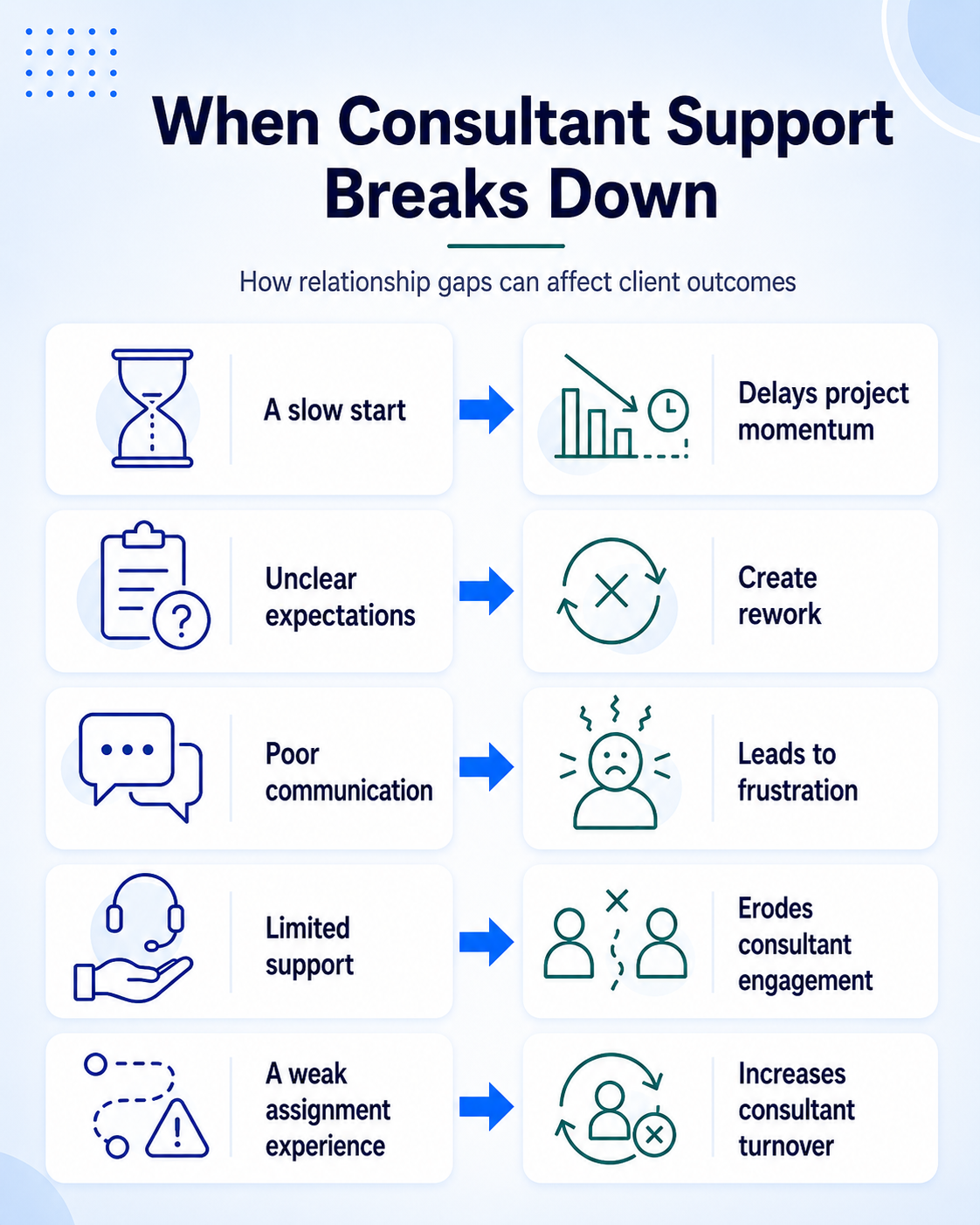
- A slow start can delay project momentum.
- Unclear expectations can create rework.
- Poor communication can lead to frustration.
- Limited support can erode consultant engagement.
- A weak assignment experience can increase consultant turnover.
These challenges create operational drag for managers, teams, and workforce leaders.
Strong consultant relationships help reduce that drag. They give consultants the clarity and context they need to contribute while giving client teams more confidence that the work is moving in the right direction.
What Strong Consultant Relationships Require
Supporting consultants effectively does not need to be complicated, but it does require intentionality.
The strongest client-consultant relationships are usually built around a few consistent practices.
Clear Expectations From the Start
Consultants need to understand more than the task list.They need to know what success looks like, how priorities will be managed, who they will work with, what systems or processes they need to follow, and where their work fits into the larger business goal.
Clear expectations help consultants focus on the right work earlier. They also reduce confusion for internal teams.
Before an assignment begins, clients should align with their staffing partner on the role, deliverables, timeline, reporting structure, required skills, and any important context about the team or project.
The more clarity there is upfront, the fewer surprises there are later.
A Thoughtful Consultant Onboarding Process
Consultant onboarding is one of the most important moments in the assignment.A strong start can help a consultant understand the team, tools, environment, and expectations. A disorganized start can make even an experienced consultant feel as if they are starting from behind.
Effective onboarding should answer practical questions:
- Who is the main point of contact?
- What systems or access are needed?
- What meetings should the consultant attend?
- What work should be prioritized first?
- How will feedback be shared?
Onboarding does not have to be lengthy. It just needs to be clear, organized, and relevant to the work.Consistent Communication
Supporting consultants requires communication that continues after the start date.Managers should establish a regular rhythm for updates, feedback, and questions. This could be a weekly check-in, project standup, status update, or other communication format that fits the assignment.
The format matters less than the consistency.
Consultants should know how to raise questions, where to get clarification, and how decisions will be communicated. Client teams should also know how to provide timely feedback so small issues do not become larger problems.
Good communication helps build trust. It also helps consultants stay aligned as priorities change.
Context Around the Work
Consultants are often brought in for specific expertise, but expertise is most useful when it is connected to context.Clients can support consultants by explaining the “why” behind the work. What business challenge is the team solving? What constraints matter? What stakeholders are involved? What outcomes are most important?
This context helps consultants make better decisions. It also helps them understand where to focus, where to ask questions, and how their work supports the broader goal.
Without context, consultants may complete tasks. With context, they can contribute more strategically.
Respectful Issue Resolution
Even strong assignments can have challenges.Requirements may shift. Timelines may change. Communication may break down. A consultant may need clarification, feedback, or support.
What matters is how those issues are handled.
Clients should create a clear path for raising and resolving concerns. That includes knowing when to involve the staffing partner, how to share feedback, and who owns follow-up.
Respectful issue resolution protects the relationship. It also helps prevent small frustrations from affecting delivery.
Ongoing Support From the Staffing Partner
A strong staffing partner should not disappear once a consultant starts.Staffing partner support can help both the client and consultant stay aligned throughout the assignment. That support may include check-ins, performance conversations, issue resolution, consultant engagement, extension planning, or future workforce needs.
This is especially valuable when client teams are busy or managing multiple priorities.
A partner can help create structure around communication and accountability so managers are not carrying the entire relationship alone.
How Clients Can Improve Consultant Engagement
Consultant engagement is about making sure they have the information, access, respect, and support they need to do the work well.
Clients can strengthen engagement by focusing on practical actions:
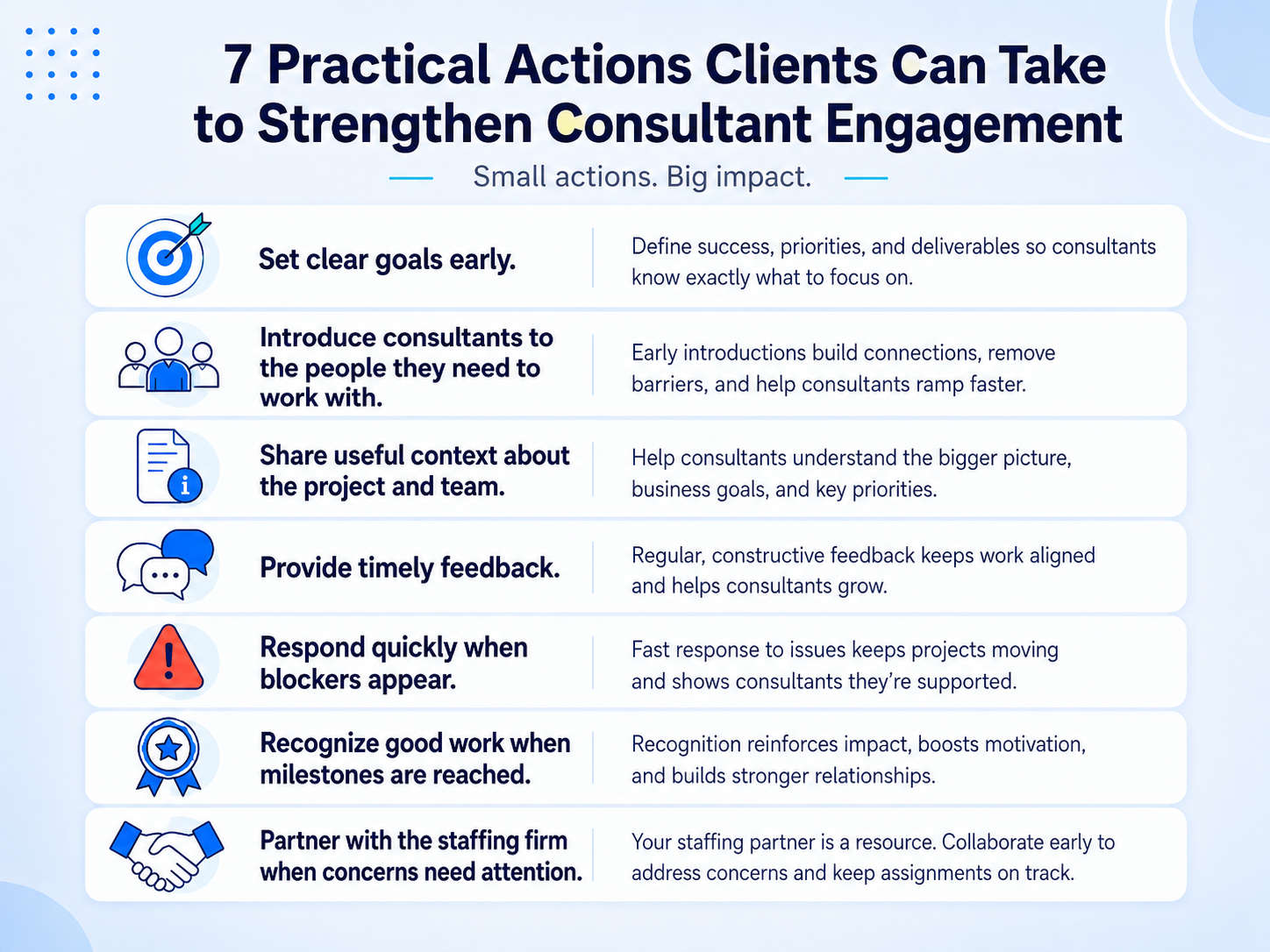
- Set clear goals early.
- Introduce consultants to the people they need to work with.
- Share useful context about the project and team.
- Provide timely feedback.
- Respond quickly when blockers appear.
- Recognize good work when milestones are reached.
- Partner with the staffing firm when concerns need attention.
These actions do not require a complicated program. They require consistency.
When consultants feel informed and respected, they are more likely to stay engaged, communicate openly, and contribute with confidence.
Why This Matters for Contingent Workforce Management
For organizations that rely on consultants, contractors, or contingent talent, strong relationships are part of effective contingent workforce management.
For hiring managers, this can mean fewer delays and smoother execution. For procurement and workforce leaders, it can mean stronger vendor performance, better visibility, and a more consistent contingent workforce experience.
A contingent workforce strategy is not only about filling roles quickly. It is about ensuring flexible talent supports business goals without adding unnecessary friction.
Poor consultant relationships can create hidden costs: slower ramp time, manager frustration, lower consultant retention, inconsistent delivery, and more time spent resolving avoidable issues.
Strong relationships create the opposite effect.
They help consultants start faster, stay aligned, and remain focused on outcomes. They also give hiring managers, procurement leaders, and talent teams more confidence in the workforce model.
In other words, consultant experience is not a soft issue.
It is a delivery issue.
FAQ: What Is Consultant Relationship Management?
Consultant relationship management is the way an organization communicates with, supports, and aligns consultants throughout an assignment. It includes clear onboarding, role expectations, regular communication, feedback, issue resolution, and coordination with a staffing or workforce partner.
For clients, strong consultant relationship management helps consultants ramp faster, stay engaged, and understand how their work connects to business goals. It can also reduce friction for hiring managers and improve the overall effectiveness of a contingent workforce program.
This is why consultant experience should not be treated as separate from delivery. When consultants are supported well, they are better positioned to contribute to stronger client outcomes.
How a Workforce Partner Can Help
A workforce partner can help clients build stronger relationships with consultants by bringing structure to the entire assignment experience.
That starts before a consultant is selected. A strong partner helps clarify the role, align expectations, and identify candidates who fit the work, the environment, and the business need.
During onboarding, a partner can help support communication, logistics, and readiness so the consultant starts with more clarity.
Once the assignment begins, the partner can help maintain alignment through check-ins, issue resolution, feedback loops, and ongoing support.
This matters because client teams should not have to manage every detail alone.
The right workforce partner helps connect the pieces: the consultant, the client team, the assignment goals, and the delivery expectations.
Better Support Creates Better Outcomes
At BCforward, we believe the consultant experience is part of delivering excellence.
When consultants are supported, clients get more than talent on paper. They get people who are better prepared to understand the assignment, engage with the work, and contribute to business goals.
BCforward is built to support both sides of the workforce relationship. For consultants, that means helping create clearer expectations, better communication, and meaningful assignment experiences. For clients, it means providing the talent, technology, and delivery structure needed to execute with greater confidence.
Strong consultant relationships do not happen after the work is done.
They are built into how the work begins, how communication continues, and how challenges are resolved along the way.
The strongest consultant relationships are built on clarity, communication, support, and shared accountability.
For clients, this is not just about creating a better experience for consultants. It is about improving the conditions that help work move forward.
When consultants know what is expected, understand the business context, and have the right support around them, they are better positioned to deliver.
And when organizations partner with a workforce partner that understands both consultant experience and client outcomes, the relationship becomes stronger on both sides.
Learn more about BCforward’s experience, mission, and workforce solutions.
Ready to Strengthen Your Consultant Relationships?
Connect with BCforward to discuss workforce solutions designed to support consultants, improve engagement, and help your teams execute with confidence.